Release time : 2026-08-06 Source :Organizing Committee
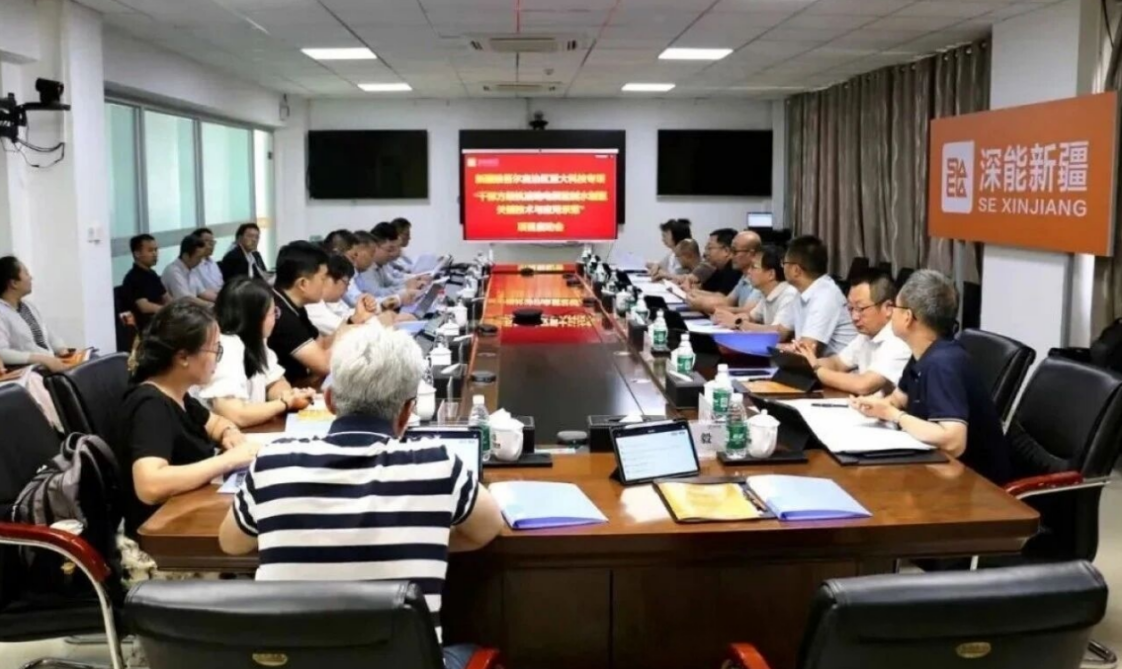
On August 4, the Xinjiang Uygur Autonomous Region officially launched a major science and technology special project — "Key Technologies and Application Demonstration of Anti-Fluctuation Electrolytic Hydrogen Production from Saline-Alkali Water at 1,000 Nm³/h Scale" — in Korla. Led by Shenneng Korla Power Generation Co., Ltd., a subsidiary of Shenzhen Energy Group, the project carries a total investment of RMB 59.6 million (approximately $8.3 million). Its core objective is to validate an industrial-scale pathway for producing hydrogen through saline-alkali water electrolysis, addressing two challenges unique to Xinjiang: volatile wind and solar power output and scarce freshwater resources.
The demonstration project features a planned 5 MW saline-alkali water electrolysis unit designed to tackle two critical local bottlenecks. First, it aims to stabilize hydrogen output despite fluctuating renewable power generation. Second, it provides a viable water source for hydrogen production in regions where freshwater is severely limited. Cross-institutional research will focus on resilience to power fluctuation, saline-alkali water adaptability, electrolytic efficiency, and system stability — with the goal of fully verifying an integrated engineering system that combines saline-alkali water utilization with green hydrogen production.
The project marks a strategic shift in local R&D efforts toward green hydrogen technologies. Public records show the autonomous region allocated RMB 19.8 million (approximately $2.75 million) in fiscal funds for the initiative. Beyond the lead enterprise, the consortium brings together academic and research institutions including Beijing University of Chemical Technology, Xinjiang University, Xinjiang Institute of Engineering, and the Shenzhen Tsinghua Research Institute. Rather than relying on in-house corporate research alone, the program leverages a major special project framework to integrate technologies, conduct pilot verification, and accelerate the commercialization of innovations.
The initiative has attracted significant attention for its relevance to Xinjiang's distinctive resource landscape. The region boasts abundant wind and solar resources yet faces severe power intermittency, alongside ample saline-alkali water reserves and limited freshwater supplies. Successful operation of the demonstration unit would reduce green hydrogen projects' heavy reliance on costly freshwater in arid zones, offering a replicable solution for water sourcing, load regulation, and economic efficiency when scaled across similar regions.
Across the full industrial chain, saline-alkali water hydrogen production extends well beyond electrolyzer technology. It requires coordinated design spanning upstream water treatment, system control, power dispatching, hydrogen storage, and downstream hydrogen utilization. Built around the wind-solar-storage-hydrogen value chain, the Korla facility will be closely integrated with local renewable power consumption, chemical industry operations, and future hydrogen-based energy applications — rather than operating as an isolated test unit.
Going forward, industry stakeholders will closely track three core deliverables: construction progress of the 5 MW demonstration plant, long-duration operational data under saline-alkali water conditions, and replicable benchmarks for hydrogen production cost and system reliability. Sustained positive operational data would enable Xinjiang to advance its green hydrogen agenda beyond mere resource advantages, leveraging differentiated technical pathways to accelerate project deployment across the region.
Exhibitor/Conference Consultation
Contact: Ms. Becky CHEN
Tel: +86 15910580218
Email: becky@cntigerexpo.com
Exhibitor Consultation
Contact: Mr. Lito HU
Tel: +86 13601321637
Email: lito.hu@cntigerexpo.com
Exhibitor Consultation & Media Cooperation
Contact: Ms. Yasmin ZHENG
Tel: +86 13621183385
Email: zhengyaxin@cntigerexpo.com