Release time : 2026-08-03 Source :Organizing Committee
This summer, power grids across China face severe supply pressure amid record-high temperatures. On July 10, national power load hit an all-time high of 1.518 billion kW, only to be surpassed four days later at 1.551 billion kW. Wind and solar power output once exceeded 600 million kW, accounting for roughly 40% of peak demand. By the end of June, China’s cumulative installed wind and solar capacity reached 680 million kW and 1.27 billion kW, respectively, serving as critical pillars for summer peak power supply.
Yet, surging capacity does not guarantee steady power output during peak hours. Because wind and solar generation fluctuates with weather and day-night cycles, generation and consumption peaks often misalign. When supply-demand gaps extend from hours to multiple days, grids require long-duration regulation capacity. Gan Yong, Member of the Chinese Academy of Engineering and former Vice President of the academy, notes that hydrogen is key to building a new power system powered by renewable energy. Against this backdrop, hydrogen has emerged as a vital supplementary solution for renewable energy curtailment and long-cycle grid regulation.
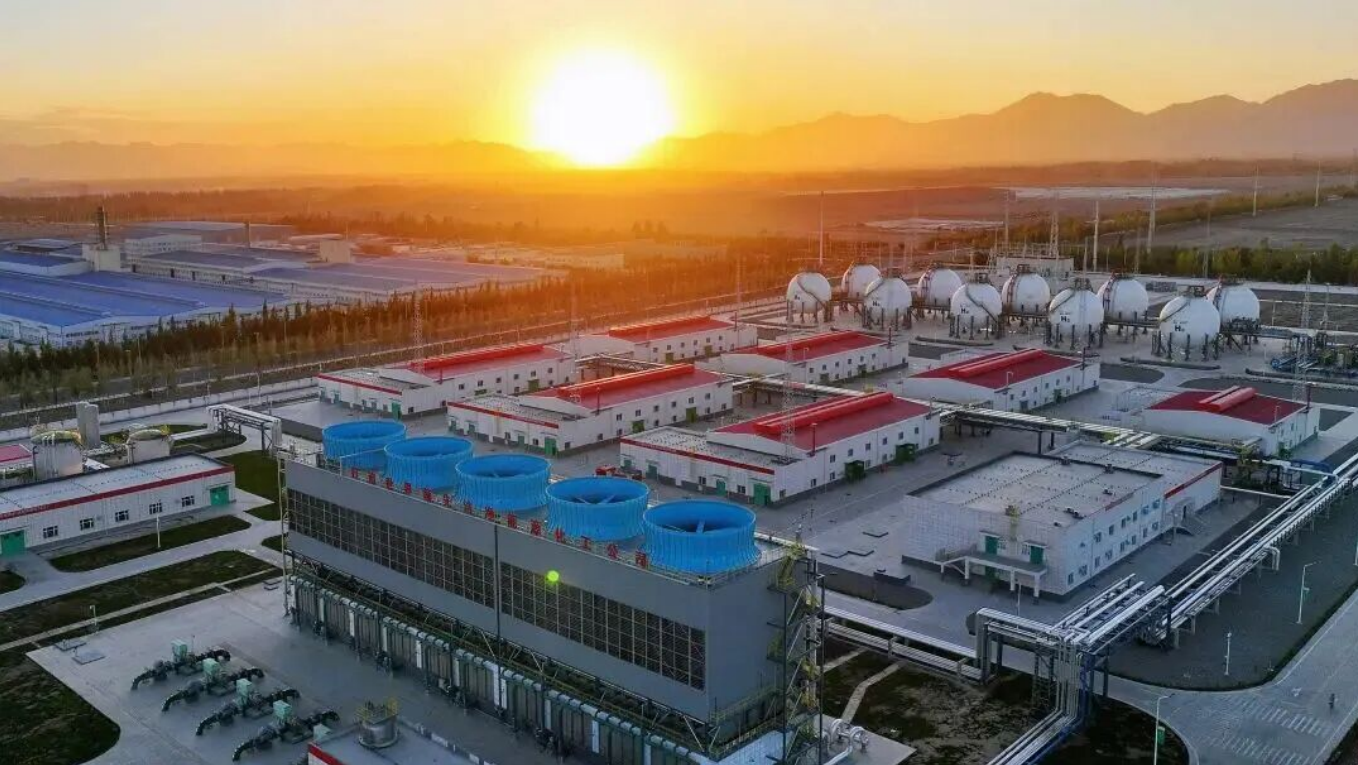
Hydrogen integrates into grid regulation through two primary pathways, both originating from water electrolysis but differing in downstream utilization and operational logic.
Path 1: Flexible hydrogen production load Electrolyzers function as adjustable power loads. When wind and solar generation surges and grid curtailment pressure mounts, wide-range adjustable electrolyzers ramp up power consumption, utilizing intermittent surplus electricity to produce hydrogen. Conversely, when power supplies tighten, operators curtail or pause hydrogen production to lower grid demand and balance supply and demand. In short, this pathway adjusts power consumption timing: producing more hydrogen during surplus periods and less during shortages.
This flexible power consumption profile qualifies electrolyzers as demand response resources. However, if the generated hydrogen is channeled directly into chemical, metallurgical, or transport sectors without reconversion to electricity, the system functions solely as load-side adjustment, failing to form a closed "power-to-hydrogen-to-power" storage loop.
Path 2: Hydrogen storage As Ouyang Minggao, Member of the Chinese Academy of Engineering, explained at the 2023 China (Western) Hydrogen Conference: "Hydrogen storage involves leveraging off-peak, surplus, or low-quality electricity for large-scale hydrogen production, converting electrical energy into hydrogen storage, and subsequently reconverting hydrogen into electricity via fuel cells or other technologies to feed back into the grid during power shortages."
Unlike flexible hydrogen production, hydrogen storage stockpiles hydrogen in advance rather than waiting for peak demand spikes. Ouyang points out that hydrogen storage enables seasonal energy shifting and will account for the lion's share of long-duration storage needed to handle 10% of future renewable energy
While flexible hydrogen production focuses on shifting power timelines to absorb surplus renewable energy, hydrogen storage achieves cross-time energy transfer. These distinct functions cater to different application scenarios.
Integrating hydrogen into power systems requires more than basic generation capabilities. For flexible hydrogen production, the industry must verify electrolyzer adaptability to volatile renewable output; for hydrogen storage, challenges such as large-scale storage, power regeneration, and application-specific deployment must be addressed. Various engineering projects have begun validating these segments.
Adaptable electrolyzers for variable renewable power In March 2025, the Huaneng Zhangye Green Hydrogen Demonstration Station successfully commissioned China's largest single photovoltaic-adaptive electrolysis hydrogen production system, passing third-party witnessing tests by TÜV SÜD. Developed by Huaneng Gansu New Energy Co., Ltd., the project integrates an 8 MW solar farm with self-developed 1,300 Nm³/h electrolyzers. Featuring a wide power regulation range of 15% to 120%, a response speed of 10% per second, and stable operation at a 20% low load, the system demonstrates robust capability in matching volatile renewable output. High-purity hydrogen generated on-site is transported via high-pressure tube trailers.
Large-scale underground hydrogen storage For hydrogen storage, achieving massive, long-term containment remains a critical threshold. In April 2026, China's first million-cubic-meter salt cavern hydrogen storage demonstration project commenced operations in Pingdingshan, Henan province. Relying on salt field resources from Henan Pingmei Gas Storage Salt Chemical Co., Ltd. and core technologies led by the Wuhan Institute of Rock and Soil Mechanics under the Chinese Academy of Sciences—with design and construction support from PetroChina and Sinopec—the project aims to achieve a solution-mined salt cavern volume exceeding 30,000 cubic meters and a storage capacity of 1.5 million standard cubic meters of hydrogen. CAE Academician Yang Chunhe noted at the commissioning ceremony that salt cavern storage breaks through large-scale hydrogen storage and transportation bottlenecks, marking a "from 0 to 1" breakthrough for China.
Hydrogen-based power generation equipment Stable generation hardware is another essential link. In November 2025, SPIC Beijing Heavy Gas Turbine Technology Co., Ltd. completed 72+24 hours of continuous full-load testing on BGT-H017, China's first self-developed megawatt-class pure hydrogen gas turbine. With a rated capacity of 1.7 MW, the unit maintained NOx emissions between 7 and 20 ppm at 15% O₂ during operation. Having previously completed full-load trials in June 2024 and performance acceptance that September, this continuous run further validated the turbine's stable operational capacity under pure hydrogen conditions, laying a solid data foundation for future hydrogen-to-power regeneration scenarios.
Emergency backup power supply Extending toward the consumer side, hydrogen is increasingly stepping into backup power roles. In July 2025, Southwest China's first 220 kW high-safety solid-state hydrogen storage fuel-energy emergency power system—jointly developed by Sichuan Rongchuang New Energy, Houpu Clean Energy Group, and Chengdu Jiqing Hydrogen Technology—was deployed at an intelligent industrial park in Chengdu's Xindu District. Featuring a containerized design integrating high-efficiency fuel cells, low-pressure solid-state storage, and uninterruptible power conversion, the system stores 32 kg of hydrogen. It delivers over two hours of continuous power at a 200 kW rated output, with runtime extendable via online module replacement. The system currently provides emergency backup for the park's cleanroom ventilation and production lighting.
On the policy front, authorities have integrated these applications into pilot programs. In June 2025, the General Office of the National Energy Administration issued a circular on organizing hydrogen pilot projects in the energy sector, prioritizing comprehensive energy applications such as fuel cell combined heat and power (CHP) in buildings and industrial parks, distributed power generation in remote areas, and hydrogen backup power for data centers and telecom base stations.
Despite these localized validations, hydrogen-based grid regulation remains largely confined to demonstration projects and engineering pilots. At a recent sub-forum in Qingdao, Gan Yong emphasized that hydrogen industry development must adhere to "scenario guidance, cost constraints, and phased rollout." Technical reliability, full-chain cost efficiency, grid-connection rules, and safety management systems represent the primary hurdles that must be cleared for widespread commercial deployment.
Technology Maturity: Hydrogen storage involves multiple conversion steps—production, storage, and regeneration—which incur energy losses. Different water electrolysis technologies involve trade-offs in response speed, efficiency, capital investment, and lifespan. Moreover, high-pressure gaseous, liquid, solid, and underground storage routes vary widely in maturity, while fuel cells and hydrogen turbines require ongoing enhancements in long-term reliability. Stable standalone performance does not automatically equate to system-level readiness under grid dispatch.
Economic Viability: Hydrogen storage demands heavy capital investments in electrolyzers, storage facilities, and generation assets, while multi-step conversions elevate the levelized cost of electricity (LCOE). Gan Yong noted that dropping green hydrogen costs to 15 RMB per kilogram or below will be vital for mass adoption. Furthermore, flexible hydrogen generation risks low utilization hours if restricted solely to surplus renewable windows, making project profitability a central commercial concern.
Standards and Safety Frameworks: Regulatory rules concerning grid integration, power response, protection control, dispatching, and certification for hydrogen storage stations remain incomplete, and equipment compatibility needs improvement. Given hydrogen's flammable and explosive nature—coupled with risks such as high-pressure operations, seal failures, hydrogen embrittlement, and leaks—comprehensive lifecycle safety protocols must be tightly integrated with grid monitoring and emergency response mechanisms.
While hydrogen is unlikely to become the primary driver of peak summer power supply in the short term, its role will grow increasingly indispensable as renewable penetration climbs. Acting as a flexible load sink to absorb curtailed wind and solar energy, and providing long-duration storage to bridge multi-day regulation gaps, hydrogen complements existing grid resources. Through ongoing pilot integration, equipment cost reduction, and market mechanism refinement, hydrogen is poised to secure a vital role in future power grid security.
Exhibitor/Conference Consultation
Contact: Ms. Becky CHEN
Tel: +86 15910580218
Email: becky@cntigerexpo.com
Exhibitor Consultation
Contact: Mr. Lito HU
Tel: +86 13601321637
Email: lito.hu@cntigerexpo.com
Exhibitor Consultation & Media Cooperation
Contact: Ms. Yasmin ZHENG
Tel: +86 13621183385
Email: zhengyaxin@cntigerexpo.com