Release time : 2026-07-17 Source :FuelcellChina
BEIJING, July 2026 — In a major leap for low-carbon metallurgy, China has successfully completed the full-process pilot run of its independently developed 50,000-tonne-per-year high-pressure hydrogen-based shaft furnace. Co-developed by Changzheng Engineering Co., Ltd. (CECO)—a subsidiary of China Aerospace Long March Chemical Engineering Corporation—and a research team led by Professor Zhang Jianliang from the University of Science and Technology Beijing (USTB), the facility achieved a continuous metallization rate exceeding 95% for its direct reduced iron (DRI) product.
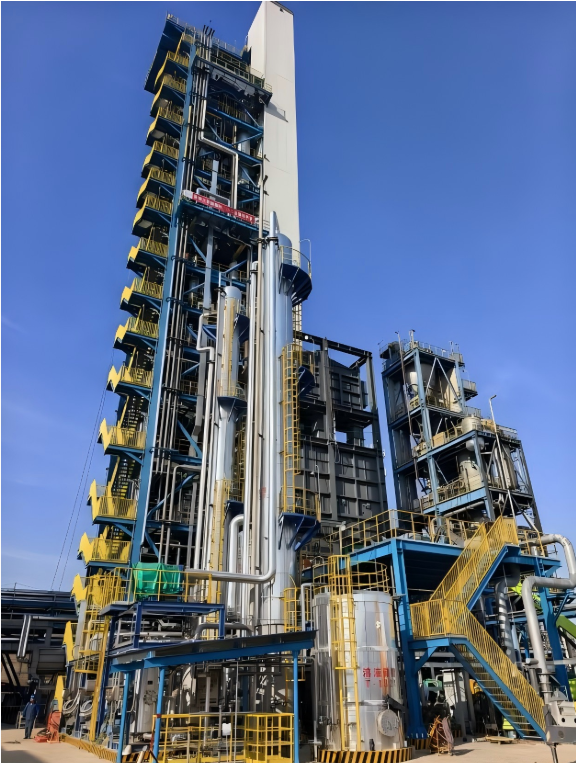
Operating at pressures ranging from 1 to 3 MPa under various H2Co ratios, the pilot plant ran with exceptional stability. This operating pressure significantly outperforms existing domestic and international hydrogen-based shaft furnace technologies, marking a critical milestone in China’s independent R&D of core green steelmaking processes and equipment.
Conquering High-Pressure Frontiers in Hydrogen Metallurgy
The hydrogen-based shaft furnace is the heart of hydrogen metallurgy. Elevating its operating pressure increases the partial pressure of the reducing gas and accelerates reduction kinetics. This pressure boost substantially elevates the volumetric productivity of the furnace, slashes energy consumption per tonne of iron, and achieves optimal pressure matching with upstream hydrogen production and gas purification systems.
However, high-pressure operations introduce formidable engineering challenges, including complex gas-solid reduction kinetics, multiphase flow control issues, and ultra-stringent safety requirements. With no mature global precedents to draw upon, this had long remained an unsolved technical bottleneck in the steel industry.
To break this impasse, the joint R&D team combined their complementary strengths:
Through joint research on gas-solid reactions and multiphase flow behavior under high-pressure conditions, the partners successfully resolved the core challenges of precise parameter regulation and system safety.
Seamless Execution from Concept to Premium DRI
Initiated in late 2024, the project progressed rapidly through a completely independent workflow spanning process development, core equipment design, construction, and commissioning.
The timeline highlights the project's aggressive pacing:
During the trial phase, the team maintained a round-the-clock shift system. Through real-time centralized monitoring, rigorous on-site inspections, multi-scenario process simulations, and proactive emergency drills, the team ensured a safe, stable, and highly controllable run that fully met all preset targets for the initial trial round.
Three Strategic Breakthroughs Anchoring the Green Transition
According to the joint R&D team, the success of this pilot run delivers three landmark advancements for the industry’s green, low-carbon transformation:
Moving forward, the joint team will continue to optimize process parameters, unlock further performance potential, and accumulate critical industrial data. This data will pave the way for industrial demonstration plants and large-scale commercial deployment. Furthermore, this successful industry-academia collaboration serves as a highly replicable model for translating cutting-edge university research into solutions for vital national engineering challenges.
Exhibitor/Conference Consultation
Contact: Ms. Becky CHEN
Tel: +86 15910580218
Email: becky@cntigerexpo.com
Exhibitor Consultation
Contact: Mr. Lito HU
Tel: +86 13601321637
Email: lito.hu@cntigerexpo.com
Exhibitor Consultation & Media Cooperation
Contact: Ms. Yasmin ZHENG
Tel: +86 13621183385
Email: zhengyaxin@cntigerexpo.com