Release time : 2026-07-16 Source :FuelcellChina; China Electric Power News
Located in Yijinhuoluo Banner, Ordos, Inner Mongolia, the Batuta Hydrogen Refueling Station, developed by CHN Energy Guohua Investment, is China's first hydrogen refueling station purpose-built for heavy-haul railways. Since entering commercial operation on June 2, 2024, the facility has supplied hydrogen fuel for heavy-haul railway locomotives, marking a significant step in the country's efforts to decarbonize rail freight operations.
Inside the station, hydrogen unloading facilities, compressors, high-pressure storage cylinder banks and high-capacity hydrogen dispensers are arranged in a streamlined layout. Unlike conventional diesel fueling depots, the site operates in a clean environment with no engine noise or exhaust emissions, reflecting the environmental advantages of hydrogen-powered railway infrastructure.
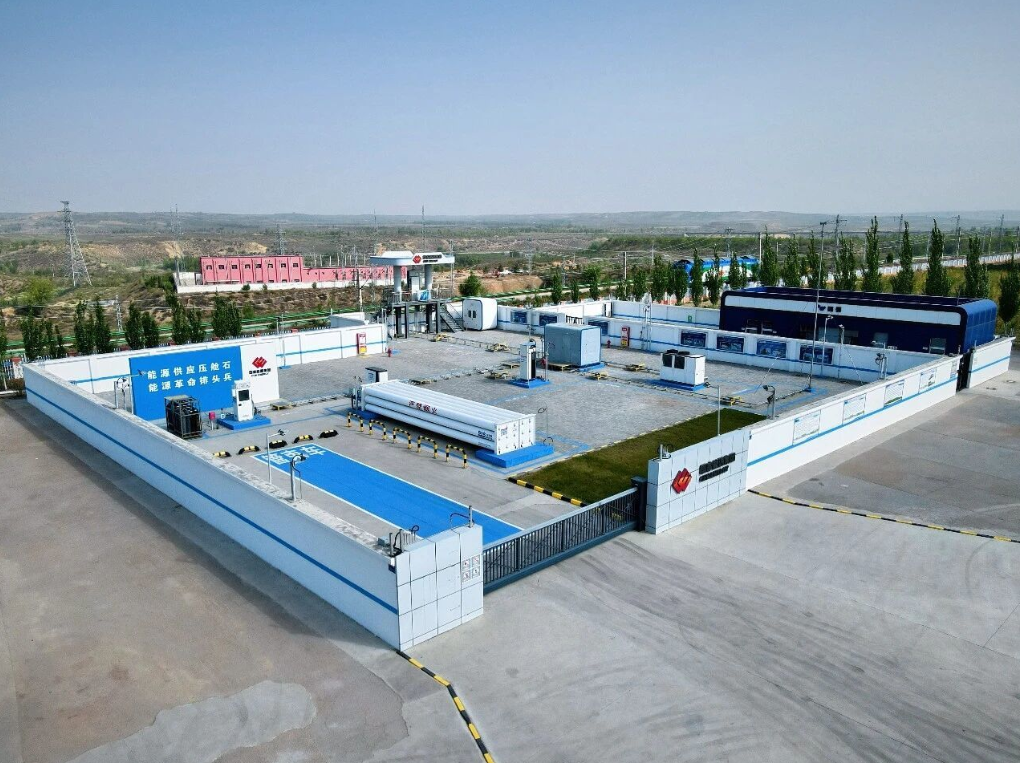
Unlike hydrogen refueling stations designed for road vehicles, the Batuta facility is dedicated to hydrogen-powered heavy-haul locomotives. Hydrogen delivered from external suppliers is compressed to pressures of up to 45 MPa before being stored on site. A self-developed intelligent station control system automates the entire refueling process by using pressure differentials, minimizing manual intervention while improving operational efficiency. According to station operators, the facility has a daily refueling capacity of 500 kg of hydrogen, enough to serve up to six hydrogen locomotives per day. Its on-site storage capacity reaches 800 kg, enabling as many as 10 locomotives to be refueled when storage tanks are fully stocked.
A key feature of the Batuta Hydrogen Refueling Station is its high-capacity hydrogen dispenser, the first of its kind developed in China for heavy-haul railway applications. The dispenser delivers hydrogen at a maximum rate of 7.2 kg/min—approximately twice the refueling speed of conventional hydrogen dispensers. A locomotive can be fully refueled in as little as 30 minutes, providing enough hydrogen for up to eight hours of continuous operation or an unloaded operating range of approximately 800 km.
Beyond its high refueling capacity, the station incorporates a range of proprietary technologies designed to improve efficiency and reliability. The project team developed a large-capacity, low-energy process control system combined with self-developed multi-load operating strategies to optimize compressor performance under varying demand conditions. According to the developer, the system delivers high refueling accuracy, lower pre-cooling energy consumption, improved performance in harsh operating environments and intelligent operation and maintenance capabilities. The station operates without direct pollutant emissions and serves as a demonstration project for the application of hydrogen technology in China's railway sector.
The station currently supports two domestically developed hydrogen-powered railway vehicles operating on the Batuta Railway: China's first high-power hydrogen fuel cell shunting locomotive and the country's first zero-tailpipe-emission catenary maintenance vehicle powered by a hybrid hydrogen fuel cell and lithium battery system. Compared with conventional diesel-powered railway vehicles, both emit only water vapor during operation while offering improved energy efficiency and significantly lower noise levels.
The hydrogen-powered shunting locomotive is designed to handle the demanding operational requirements of heavy-haul railway yards. It performs a range of duties, including railcar marshalling, train assembly, short-distance freight transfers and loading operations for 10,000-ton freight trains serving mining and industrial facilities. The locomotive delivers a maximum wheel output of 2,400 kW and a starting tractive effort of 560 kN, enabling it to haul heavy freight trains at speeds of up to 100 km/h. With a full hydrogen supply, it can operate continuously for more than 12 hours, making it well suited to the long-duty cycles typical of mining railways.
The station also supports China's first hydrogen-powered catenary maintenance vehicle equipped with a hybrid hydrogen fuel cell and lithium battery powertrain. Designed for the inspection, maintenance, construction and emergency repair of railway overhead contact systems (OCS), the vehicle features an independently developed straight-boom dual-slewing work platform that provides a maximum working height of 11 m and a horizontal reach of 9.8 m. The design expands maintenance coverage while reducing access limitations commonly associated with conventional railway maintenance equipment. Powered by a 330 kW propulsion system, the vehicle offers a hydrogen-powered operating range of approximately 500 km, meeting the requirements of routine inspection and maintenance operations.
Operating in the coal-producing region of Ordos, where winter temperatures can fall below −30°C and airborne coal dust is common throughout the year, the hydrogen-powered railway equipment has been engineered to withstand some of China's most demanding operating conditions. The project team developed an integrated hydrogen, air and coolant management system for the fuel cell, together with proprietary low-temperature start-up technology that enables reliable operation in extreme cold. A dual-stage air filtration system helps prevent coal dust from entering critical components, improving equipment reliability and ensuring stable performance in the harsh environment of northern China's mining railways.
According to project engineers, hydrogen offers a gravimetric energy density more than three times that of diesel, making it well suited to the traction requirements of heavy-haul freight operations without increasing vehicle weight. Unlike electrified railways, hydrogen-powered locomotives can also operate without overhead catenary infrastructure, allowing existing rail corridors to be upgraded with lower capital investment and shorter construction timelines. This flexibility makes hydrogen an attractive option for decarbonizing freight rail services in regions where full railway electrification is either technically challenging or economically impractical.
CHN Energy currently operates more than 2,000 km of self-managed railway lines, where many track maintenance vehicles and service locomotives still rely on diesel power. The deployment of hydrogen-powered railway equipment offers a lower-emission alternative with high power density and operational flexibility, providing a practical pathway for reducing carbon emissions from heavy industrial rail transport.
According to project estimates, each hydrogen-powered locomotive can reduce annual diesel consumption by approximately 164 tonnes and cut carbon dioxide emissions by around 508 tonnes. If all 21 shunting locomotives operating on the Xinshuo Railway are eventually replaced with hydrogen-powered models, annual carbon dioxide emissions could be reduced by approximately 10,676 tonnes. In addition to lowering greenhouse gas emissions, hydrogen-powered vehicles operate more quietly than conventional diesel locomotives and eliminate tailpipe exhaust, helping improve working conditions for railway personnel and reducing the environmental impact of railway operations.
As hydrogen-powered locomotives depart the refueling bays at the end of the day, the only visible by-product is water vapor. The Batuta Hydrogen Refueling Station integrates hydrogen refueling infrastructure with heavy-haul railway applications, demonstrating how hydrogen can be deployed in one of the most energy-intensive segments of the transport sector.
By combining domestically developed hydrogen refueling technology with hydrogen-powered railway vehicles, the project establishes an integrated demonstration model covering hydrogen supply, storage, refueling and rail applications. As China continues to expand the use of low-carbon technologies across its transportation network, the Batuta project provides a valuable reference for the wider adoption of hydrogen in heavy-haul rail operations and highlights the growing role of hydrogen in supporting the decarbonization of industrial transport.
Exhibitor/Conference Consultation
Contact: Ms. Becky CHEN
Tel: +86 15910580218
Email: becky@cntigerexpo.com
Exhibitor Consultation
Contact: Mr. Lito HU
Tel: +86 13601321637
Email: lito.hu@cntigerexpo.com
Exhibitor Consultation & Media Cooperation
Contact: Ms. Yasmin ZHENG
Tel: +86 13621183385
Email: zhengyaxin@cntigerexpo.com