Release time : 2026-08-05 Source :Organizing Committee
China's first zero-carbon hydrogen integrated energy hub designed for a metro depot has officially entered operation in Xi'an, marking a milestone in the application of hydrogen and renewable energy technologies in urban rail transit.
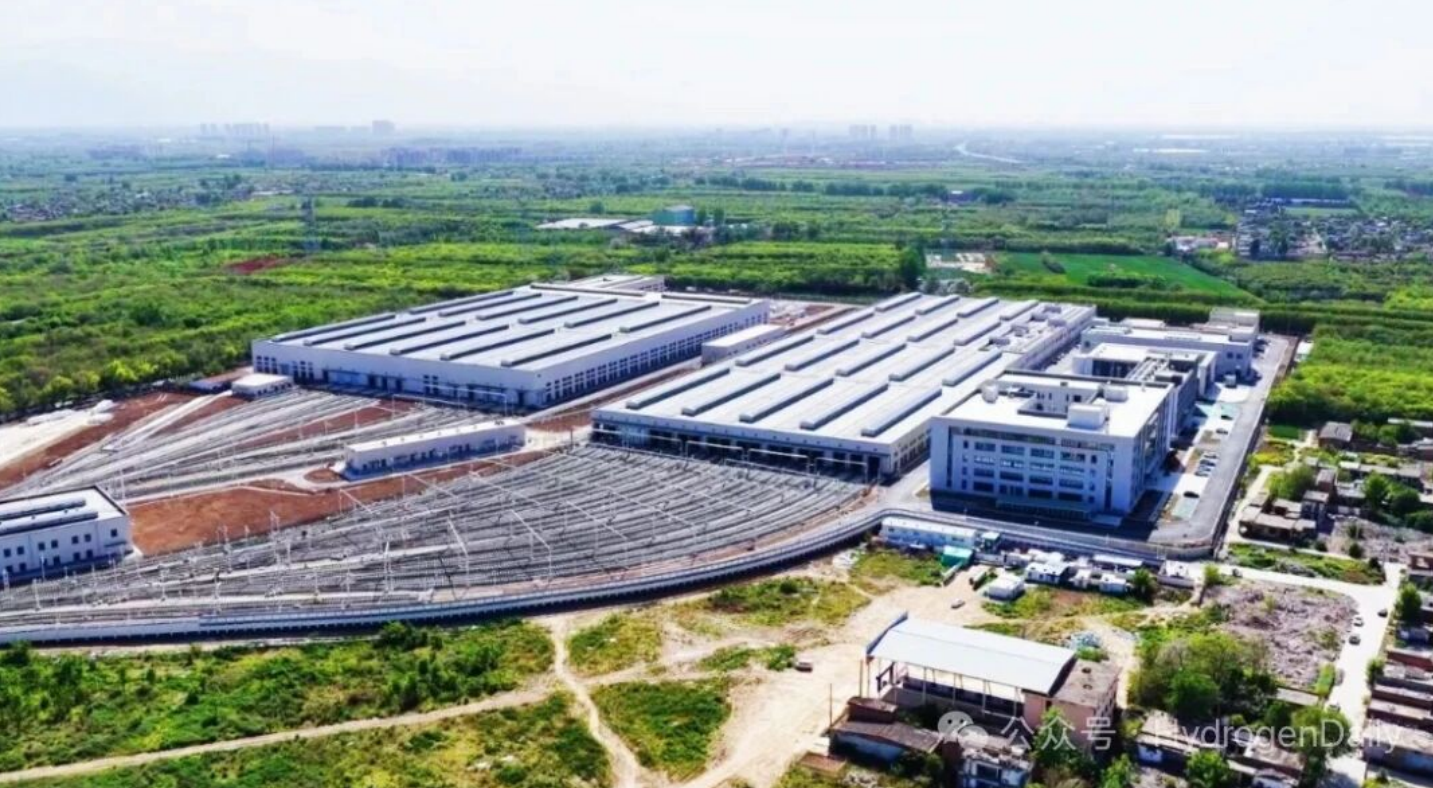
Located at the Xiliu Depot of Xi'an Metro Line 15 in Xi'an High-tech Zone, the Hydrogen-Powered Zero-Carbon Smart Energy Center was constructed by China State Construction Sixth Engineering Bureau (CSCEC Silk Road Investment & Transportation Co.). The project occupies approximately 71,000 square metres, provides heating services for nearly 118,900 square metres of facilities, and represents a total investment of around 179 million yuan.
Designed to reduce reliance on conventional grid electricity, the project integrates photovoltaic generation, battery energy storage, hydrogen and geothermal heating into a closed-loop multi-energy system capable of achieving hour-by-hour net-zero carbon emissions. The facility consists of an energy management centre, a hydrogen station, a photovoltaic system, battery storage and a ground-source heat pump network.
The rooftop photovoltaic system has an installed capacity of 7 MW and is expected to generate approximately 7.7 million kWh of electricity annually. A large-scale battery storage system stores excess solar power during peak generation periods and releases it when demand increases, improving system stability and reducing renewable energy curtailment.
The hydrogen system features China's first depot-scale integrated hydrogen station, combining green hydrogen storage with hydrogen fuel cell power generation. The fuel cell system has a total installed capacity of 1.28 MW, providing clean backup power for depot operations.
Heating and cooling are supplied through a hybrid geothermal system consisting of six mid-deep geothermal wells reaching depths of 2,700 metres and more than 480 shallow ground heat exchange wells extending approximately 240 metres, enabling stable year-round thermal energy supply.
The project also incorporates digital twin technology and an AI-based energy management platform developed using research results from the team led by Academician Guan Xiaohong of Xi'an Jiaotong University. The intelligent control system enables real-time monitoring, optimization and visualization of the entire energy management process. Once fully operational, the project is expected to reduce carbon dioxide emissions by approximately 30,000 tonnes per year.
Construction began in May 2025, while the photovoltaic system achieved grid connection in January 2026. The photovoltaic, hydrogen and energy storage systems were subsequently integrated before the project entered its final commissioning phase in February. Following successful trial operation, the energy hub officially entered commercial operation in July 2026. By late July, cumulative electricity generation had reached approximately 2.8 million kWh, and the facility is now operating under stable conditions.
Exhibitor/Conference Consultation
Contact: Ms. Becky CHEN
Tel: +86 15910580218
Email: becky@cntigerexpo.com
Exhibitor Consultation
Contact: Mr. Lito HU
Tel: +86 13601321637
Email: lito.hu@cntigerexpo.com
Exhibitor Consultation & Media Cooperation
Contact: Ms. Yasmin ZHENG
Tel: +86 13621183385
Email: zhengyaxin@cntigerexpo.com