



Release time : 2026-05-29 Source :China Securities Journal and 21st Century Business Herald
On May 22, the National Development and Reform Commission (NDRC) held its monthly press conference. Li Chao, Deputy Director-General of the Policy Research Office and NDRC spokesperson, introduced recent developments and answered questions from the media.
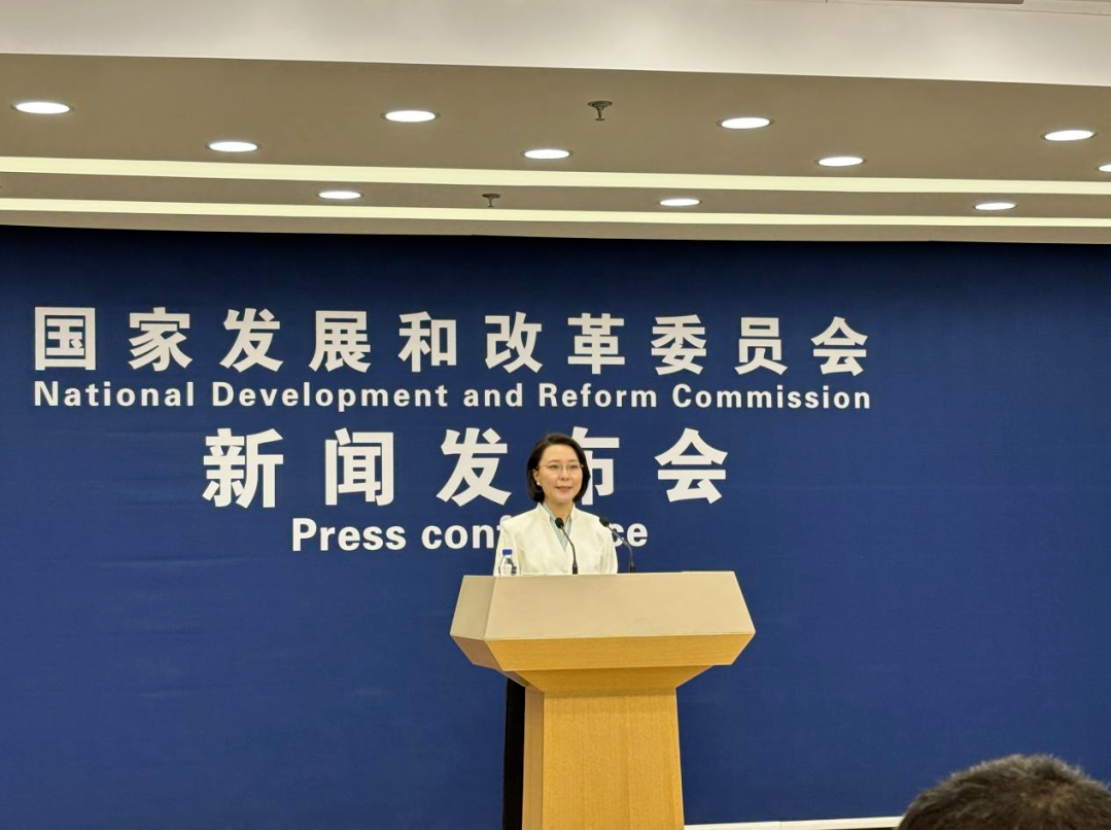
Responding to a question regarding the country's planned "Six Networks" initiative, Li noted that, in addition to the six major infrastructure networks, significant investment opportunities also exist in five other areas, including integrated transportation infrastructure, low-altitude infrastructure, "AI+" infrastructure, public service facilities such as education and healthcare, and consumer-oriented infrastructure.
According to Li, these investments will serve as a powerful driver for expanding domestic demand, stabilizing economic growth, promoting coordinated supply-demand development, supporting industrial upgrading, improving public services, and strengthening national security. He emphasized that the various infrastructure networks can not only function independently but also generate synergies through interconnection and integration, creating effects greater than the sum of their parts.
Li highlighted the development of new-type power grids and underground utility networks as representative examples.
China has already established one of the world's largest, safest, and most technologically advanced interconnected power systems. The national grid currently supports annual electricity consumption exceeding 10 trillion kWh and facilitates the integration of more than 1.8 billion kW of renewable energy capacity into the power system.
However, as renewable energy deployment continues to accelerate, regional imbalances in electricity supply and demand are becoming more pronounced, while the complexity of maintaining secure grid operations is steadily increasing. As a result, China must build a new-generation power grid that is safer, greener, more resilient, and more intelligent.
Li stated that during the 15th Five-Year Plan period (2026–2030), China is expected to invest more than RMB 5 trillion in power grid infrastructure. Planned projects include:
By the end of 2025, China had built nearly 3.9 million kilometers of underground utility pipelines, the largest network in the world.
Nevertheless, challenges remain, including aging infrastructure requiring replacement, limited levels of digitalization and intelligent management, insufficient urban drainage capacity, water supply leakage, and inefficiencies in district heating systems.
Li noted that during the 15th Five-Year Plan period, China is expected to invest approximately CNY 5 trillion to construct or upgrade around 770,000 kilometers of gas, water supply, wastewater, and heating pipelines. These investments aim to address critical infrastructure gaps and improve the safety and resilience of urban utility systems.
According to Li, the NDRC will focus on three key priorities:
First, accelerate the release of relevant plans and implementation programs, coordinate the development of the "Six Networks", define investment priorities across sectors, and establish annual targets and timelines.
Second, intensify efforts to advance major infrastructure projects through a dynamic project pipeline mechanism featuring projects under implementation, preparation, reserve, and long-term planning, while emphasizing both quality and efficiency.
Third, strengthen financial and resource support by coordinating government funding, leveraging new policy-based financial instruments, encouraging private investment participation, and improving access to land, environmental approvals, and other essential project resources.
Exhibitor/Conference Consultation
Contact: Ms. Becky CHEN
Tel: +86 15910580218
Email: becky@cntigerexpo.com
Exhibitor Consultation
Contact: Mr. Lito HU
Tel: +86 13601321637
Email: lito.hu@cntigerexpo.com
Exhibitor Consultation & Media Cooperation
Contact: Ms. Yasmin ZHENG
Tel: +86 13621183385
Email: zhengyaxin@cntigerexpo.com